About SCI-Arc
A college without walls.
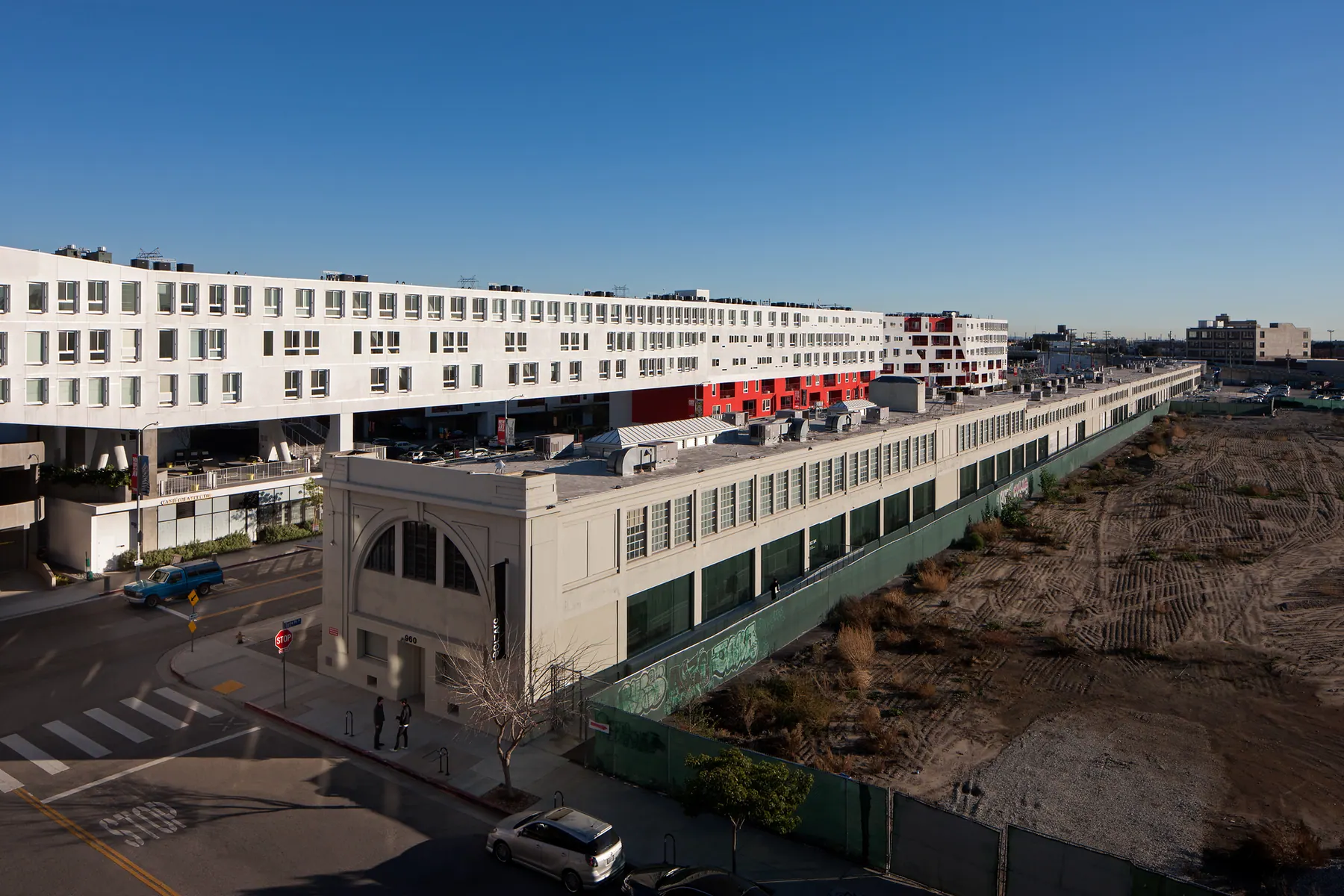
Located in downtown Los Angeles, SCI-Arc is a world-renowned center of innovation and one of the nation’s few independent architecture schools.
Mission
SCI-Arc teaches architects to engage, speculate, and innovate; to take the lead in reimagining the limits of architecture.
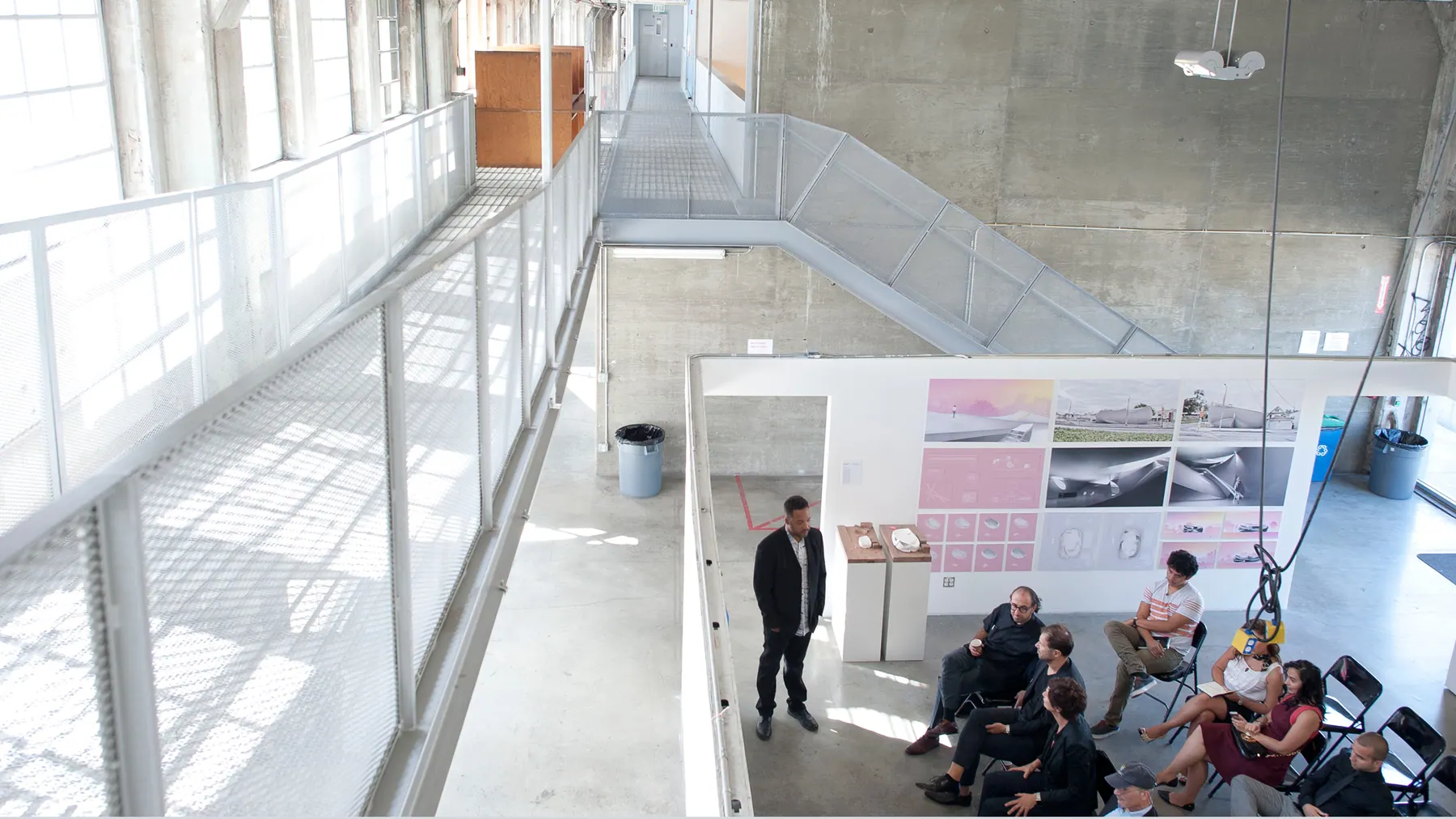
Our approximately 500 students and 80 faculty members, most of them practicing architects, work together in a fluid, nonhierarchical manner to rethink assumptions, create, explore, and test the limits of architecture.
An integral part of the emerging cultural hub of a city with a tradition of architectural experimentation, SCI-Arc is devoted to finding radically new responses to the real needs and aspirations of today’s world.
The undergraduate and graduate professional degrees awarded by SCI-Arc are accredited by both the National Architectural Accrediting Board (NAAB) and the WASC Senior College and University Commission.
Rankings
Top ten. Everywhere.
In DesignIntelligence’s survey of America’s top-ranked architecture and design schools, SCI-Arc ranks top 10 across every focus area, in both the graduate and undergraduate categories.
Design theory
Top 10 · Graduate & Undergraduate
Construction methods
Top 10 · Graduate & Undergraduate
Materials
Top 10 · Graduate & Undergraduate
Sustainability
Top 10 · Graduate & Undergraduate
History
Since 1972.
Originally called the New School, SCI-Arc was founded on the idea of a “college without walls” by faculty and students who wanted a more experimental approach than traditional schools offered.
- 1972
Ray Kappe and founding faculty Thom Mayne, Jim Stafford, Glen Small, Ahde Lahti, Bill Simonian and Shelly Kappe break from Cal Poly Pomona. The “New School” opens with seventy students at 1800 Berkeley Street, Santa Monica.
- 1970s
The graduate program begins and both degrees receive initial accreditation. A European studies program begins in Nîmes, France.
- 1980s
Students and staff found Architects, Designers, and Planners for Social Responsibility. Exchanges begin with Shibaura Institute of Technology in Tokyo.
- 1987
Alumnus Michael Rotondi becomes director and Making+Meaning, the summer foundation program, begins. An NEH grant and the nation’s first student exchange studio in Moscow follow.
- 1992
The school moves to an industrial building at 5454 Beethoven Street, Los Angeles.
- 2001
Renovation of the quarter-mile-long Santa Fe Freight Depot downtown is completed and the first classes are held there. The Mayor proclaims SCI-Arc Day.
- 2002
The SCI-Arc Gallery opens and goes on to commission more than fifty installations, from Zaha Hadid to emerging practices.
- 2025
Winka Dubbeldam becomes Director/CEO. The Resilient Futures Task Force forms to help communities rebuild after the Los Angeles wildfires.
From the Director
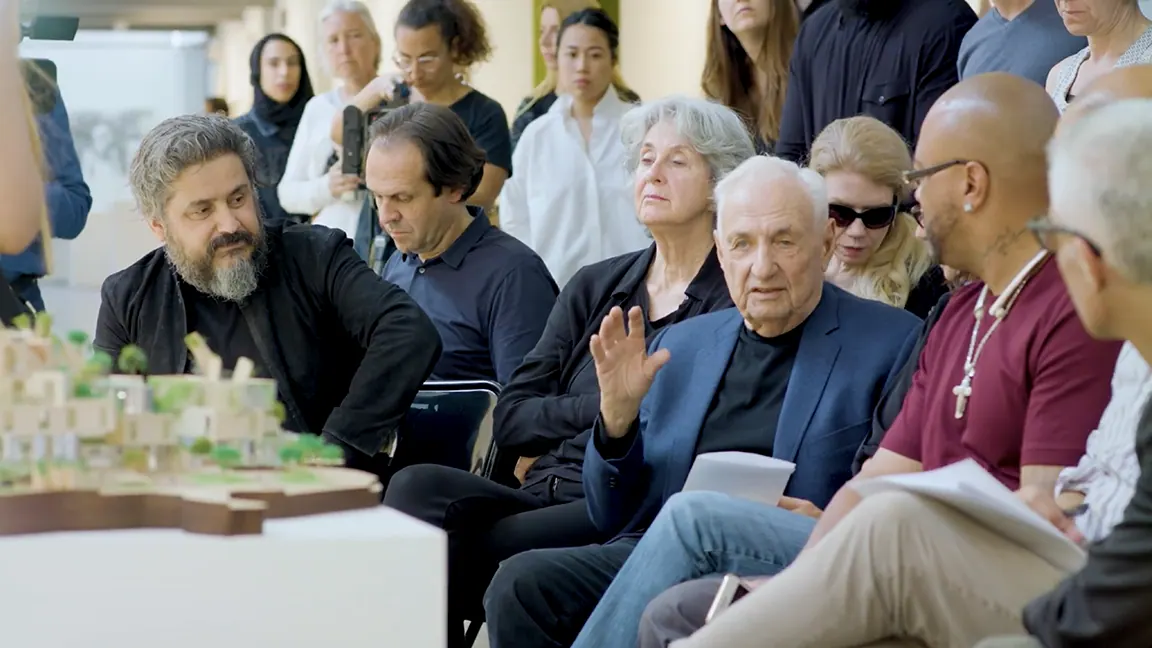
“Experimentation, research, and intellectual risk-taking are central to our culture, and student work remains at the heart of everything we do.”
Winka Dubbeldam, Director / CEO
SCI-Arc has long been a place where architecture is understood not only as a professional discipline, but as a critical and speculative practice capable of shaping more equitable and inclusive futures.
People
Leadership.
SCI-Arc’s leadership, faculty and staff come from dynamic backgrounds and countries, reflecting the globalism of the institution and its student body.
Winka Dubbeldam
Director / CEO
Darin Johnstone
Vice Director · Chief Academic Officer
Nathan Hume
Graduate & Postgraduate Programs Chair
Marcelyn Gow
Undergraduate Program Co-Chair
Kristy Balliet
Undergraduate Program Co-Chair
Faculty
Renowned theorists, critics, historians and many of Los Angeles’s leading architectural practitioners.
Belonging
Great design for a changing world.
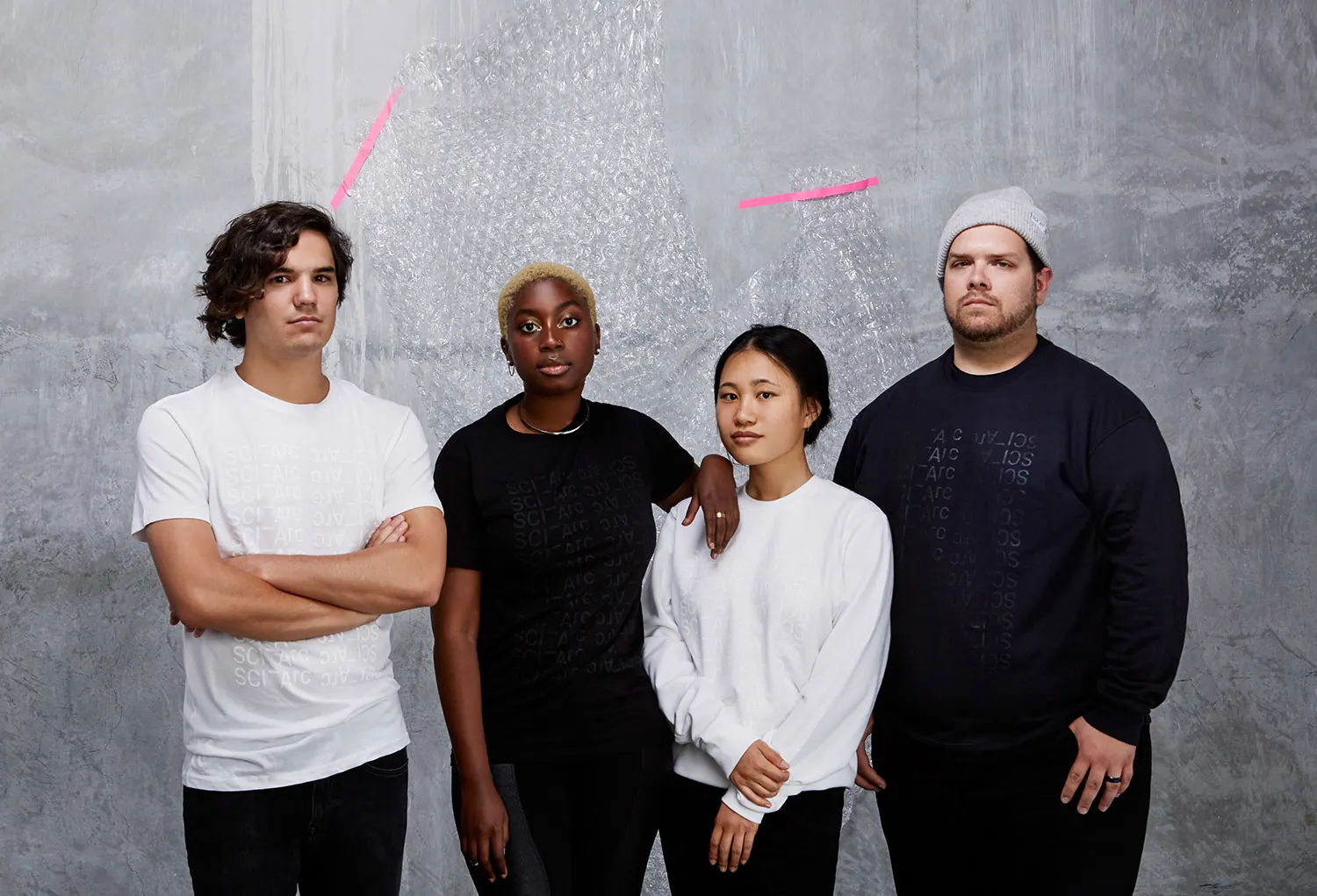
SCI-Arc admits students of any race, color, and national or ethnic origin, and believes that a broad field of perspectives produces better architecture.
Through the Resilient Futures Task Force, faculty and collaborators are supporting Altadena and Pacific Palisades communities with knowledge sharing and strategies for fire-resilient futures.
Priority deadline · January 15
Shape what comes next.
The priority application deadline for Fall 2027 is January 15. Applications for undergraduate, graduate and postgraduate programs are open now.